- Home
- News
- The Global Infrastructure Renaissance: Why Advanced Cable Tray Systems are the Backbone of Next-Generation Power Distribution
The Global Infrastructure Renaissance: Why Advanced Cable Tray Systems are the Backbone of Next-Generation Power Distribution
Introduction: The Unseen Foundation of Modernity In the grand theater of global industrialization, the most critical components are often the least visible. As we navigate through 2026, the rapid expansion of high-tech manufacturing, hyperscale data centers, and the global transition to green energy has placed a localized spotlight on electrical management systems. At the heart of this revolution is the cable tray. Far from being a simple metal support, the modern cable tray system represents the culmination of decades of structural engineering, material science, and thermodynamic research. As infrastructure projects in the United States, Australia, and the Middle East reach unprecedented scales, the strategic implementation of these systems has become a deciding factor in project viability and long-term operational efficiency.
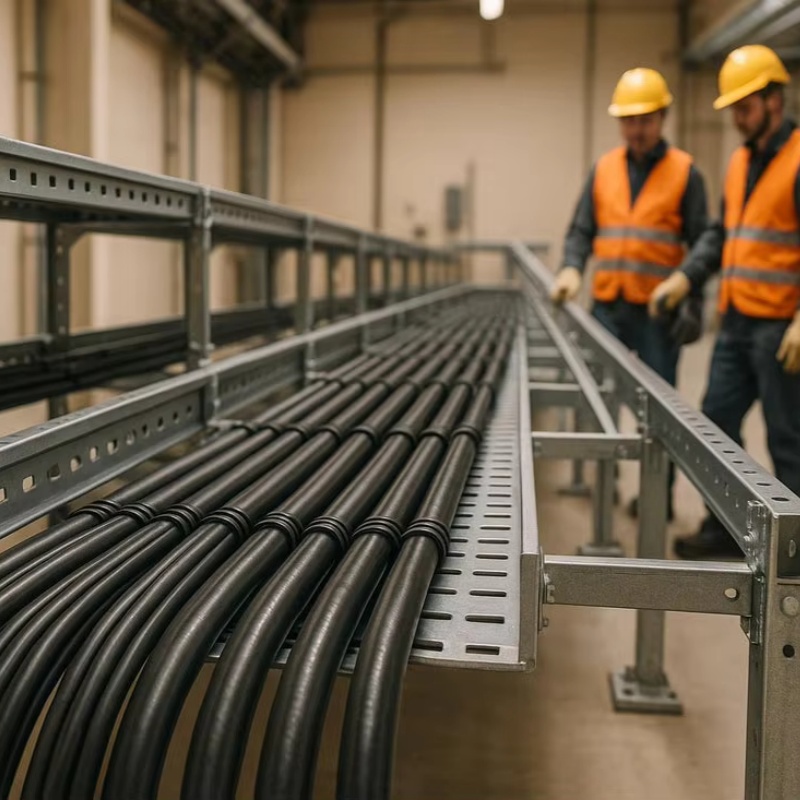
The Economic Engine: Market Dynamics and Growth Drivers The global cable management market is projected to exceed $5 billion by 2027, driven largely by the digital transformation of emerging economies. In markets like the Philippines and Saudi Arabia, urban development and industrial zones are being built from the ground up, requiring robust electrical architectures. The shift from traditional conduit-based wiring to open-bottom cable tray solutions is not merely a trend; it is a fundamental economic shift. Conduits, while protective, are rigid and labor-intensive. In contrast, the modularity of tray systems allows for a “future-proof” installation.
Project managers are increasingly recognizing that the initial capital expenditure (CAPEX) of a high-quality cable tray system is offset by a massive reduction in operational expenditure (OPEX). The ability to add, remove, or upgrade cables without tearing down walls or dismantling complex pipe networks provides an agility that modern business demands.
Technical Superiority: Airflow, Thermodynamics, and Safety One of the primary engineering challenges in high-voltage power distribution is heat. When electricity flows through a conductor, resistance generates thermal energy. In enclosed conduit systems, this heat is trapped, leading to “derating”—a phenomenon where the cable’s current-carrying capacity must be reduced to prevent insulation melt-down.
A professionally engineered cable tray, particularly perforated or ladder variants, facilitates natural convection. This airflow allows cables to operate at their peak efficiency, often allowing engineers to specify smaller cable diameters for the same power load, resulting in millions of dollars in material savings over a large-scale project. Furthermore, the safety implications are profound. In the event of a short circuit or a thermal event, an open tray system allows for rapid smoke dissipation and easier access for fire suppression systems, minimizing the risk of a catastrophic facility-wide fire.
Material Innovation: From Galvanization to Stainless Steel Durability is the hallmark of Qinkai Systems’ philosophy. In the harsh environments of offshore oil rigs or coastal renewable energy plants, corrosion is the enemy of infrastructure. The industry has seen a massive uptick in the demand for Hot-Dip Galvanized (HDG) and Stainless Steel (SS304/SS316) cable tray components.
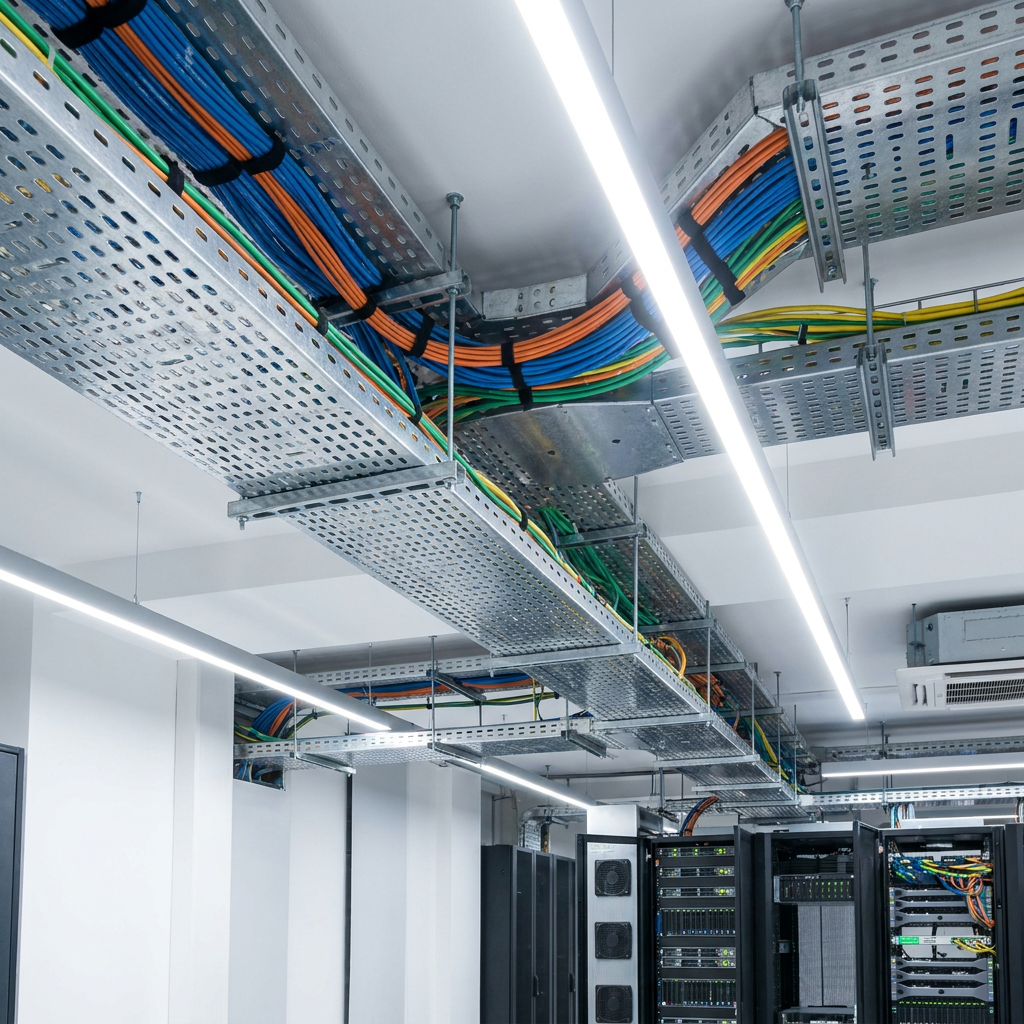
The process of hot-dip galvanization creates a metallurgical bond, providing a sacrificial zinc layer that protects the steel core even if the surface is scratched during installation. In ultra-corrosive environments, such as chemical processing plants, Stainless Steel 316 remains the gold standard, offering resistance to chlorides and acids that would disintegrate standard materials within months. Understanding these material grades is crucial for buyers in the Middle East and Australia, where high salinity and extreme temperatures test the limits of industrial hardware.
Application Spotlight: The Data Center Boom As artificial intelligence (AI) and cloud computing demand more processing power, data centers are becoming denser and hotter. Within these facilities, the cable tray is no longer just a support; it is part of the cooling architecture. Wire mesh and aluminum trays are preferred here for their lightweight and high-capacity properties. The precision required in these environments is staggering—thousands of fiber optic cables must be routed with perfect bend radii to prevent signal loss. This is where the synergy between a well-designed cable tray and a strategic cable ladder becomes evident, providing the structural integrity needed for heavy power feeds while maintaining the delicacy required for data transmission.
Conclusion: Building for the Next Century As we look toward the future, the integration of “Smart Trays“—equipped with fiber-optic temperature sensors and load monitors—is on the horizon. For industrial/trading integrated companies like Sunnie’s, the opportunity lies in providing not just the hardware, but the engineering expertise to integrate these systems into the smart cities of tomorrow. The humble cable tray has truly evolved into a high-tech asset, ensuring that as our world becomes more electrified, our foundations remain stronger than ever.